

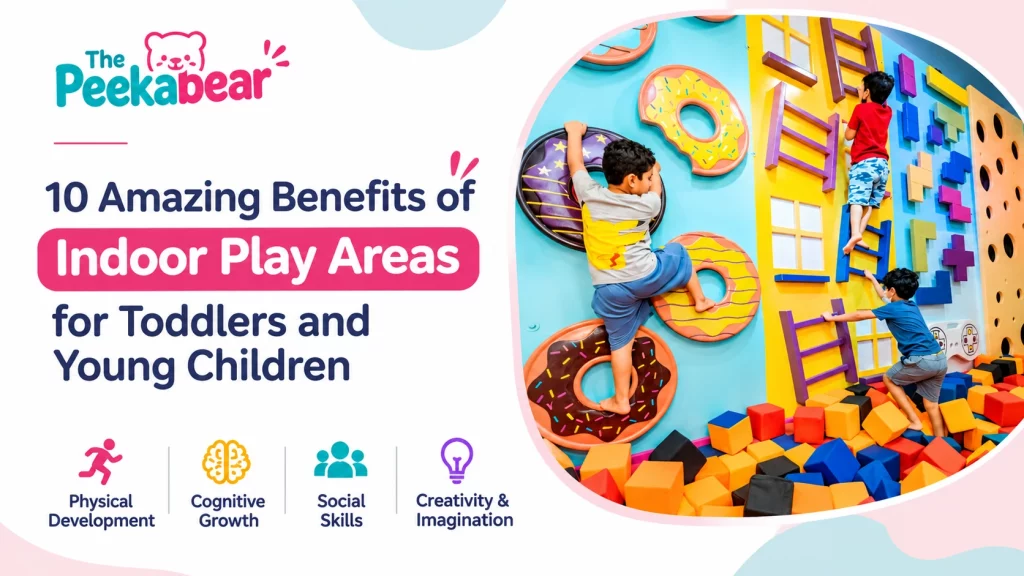
Childhood is a time of discovery. Every jump, climb and giggle helps children understand the world around them. Parents often focus on structured learning, but play matters just as much for overall development.
For families in Pakistan, hot weather, rain and limited outdoor spaces can make active play tricky. That is where the benefits of indoor play areas really show. They encourage movement, build coordination, support social skills and spark creativity. At The Peekabear, children can explore interactive activities while learning through play.
1. Supports Physical Development and Fitness
Young children need plenty of chances to move. Indoor play areas let them jump, climb, crawl, slide and run, which helps strengthen muscles and improve balance and flexibility. Climbing teaches arm and leg coordination, while age-appropriate trampolines give children a chance to practise body control. Regular active play also builds healthy movement habits early.
2. Improves Motor Skills and Coordination
Indoor playgrounds help children practise gross motor skills such as jumping, balancing and crawling, along with fine motor skills such as grasping and picking up objects. Moving through soft-play equipment or a ball pit builds coordination and body awareness. The more movements children try, the more confident they become.
3. Encourages Social Interaction and Friendship
Play areas give children a place to meet others and join group activities. They practise sharing, waiting for a turn, communicating ideas and cooperating. For toddlers, even playing alongside another child or swapping a toy is a valuable lesson. Over time these moments build communication skills and comfort in groups.
4. Develops Creativity and Imagination
To a child, a slide can become an adventure and a ball pit can become a whole imaginary world. Open-ended play encourages curiosity, independent thinking and self-expression. Parents can join in by asking imaginative questions or inviting children to invent their own games.
5. Boosts Cognitive Development and Problem-Solving
Play is how young children learn how things work. Climbing structures make them decide where to place hands and feet, and interactive games teach them to follow instructions and understand cause and effect. When something does not work the first time, children try again, and that trial and error builds early reasoning skills.
6. Builds Confidence and Independence
A toddler who feels nervous about a slide may grow comfortable after watching others and hearing a parent’s encouragement. Each small success builds confidence. Children also practise simple decisions, like choosing the next activity. Let them explore at their own pace, and never pressure them into something they are unsure about.
7. Supports Emotional Development
Play teaches children to handle feelings. Waiting for a turn builds patience, finishing a tricky climb brings pride, and trying again after a setback builds resilience. Parents can help by acknowledging feelings and offering encouragement.
8. Provides a Dedicated Play Environment
Indoor play areas are designed around children, with soft-play equipment, separate play zones and activities for different ages. Still, no play space is completely risk-free. Check equipment condition, cleanliness, flooring, age limits and supervision, and always supervise younger children closely.
9. Encourages Active Play Over Screen Time
Technology has a place in modern family life, but children also need physical activity and real-world interaction. Indoor play gives them an active alternative to long hours in front of a screen. The World Health Organization recommends at least 180 minutes of physical activity a day for children aged 1 to 4, including at least 60 minutes of moderate-to-vigorous activity for ages 3 to 4. A play session can contribute to that total alongside outdoor play.
10. Makes Learning Fun Through Interactive Activities
Young children love to touch, explore and experiment. Climbing builds movement planning, ball pits build spatial awareness, slides build balance and group activities build cooperation. Because it feels like play instead of a lesson, children learn naturally.
Why Indoor Play Areas Suit Families in Pakistan
Pakistan’s climate and city lifestyles make indoor spaces attractive. On very hot days, outdoor play can be uncomfortable for toddlers, and rain can cancel plans. Indoor play areas let children stay active in a comfortable setting, whether you are planning a weekend outing or a birthday celebration. For more ideas, see these indoor activities for kids in Karachi and this guide to kids play areas in Karachi.
What to Look for in a Good Indoor Play Area
- Safety: well-maintained equipment, suitable flooring and age-appropriate activities.
- Cleanliness: regular cleaning and good hygiene practices.
- Supervision: ask about staff supervision and what is expected of parents.
- Variety: physical, interactive and creative options.
- Age suitability: activities that match your child’s age and ability.
Taking a few minutes to check these points before you visit helps you pick a space where your child can play happily and safely. Dress children in comfortable clothes, bring water, and stay nearby so you can cheer them on and step in when needed.
Why Choose The Peekabear?
The Peekabear offers an indoor play experience in Karachi built around movement, exploration and fun. You can learn more on the about page. Its play features include:
- Mini trampoline: encourages jumping and coordination.
- Ball pit and foam pit: playful ways to explore movement.
- Slides, including a super tube slide: practise balance and control.
- Wall climbing: builds confidence and movement planning.
- Interactive learning games: mix fun with exploration.
- Toddler area and car track: age-appropriate play for younger children.
See the gallery for photos of the space. Families can also arrange themed birthday parties, and the party venue page has more detail. For birthday ideas, read this guide to a kids birthday party in Karachi.
The Peekabear lists branches at Ocean Mall, Gulistan-e-Johar and North Nazimabad. Check the prices and promotions page for tickets, and use the contact page to confirm timings, availability and age requirements with your nearest branch.
Frequently Asked Questions
What are the benefits of indoor play areas for toddlers?
They encourage physical activity, improve coordination, build social skills and support creativity. Toddlers also gain confidence by trying new activities.
Are indoor play areas good for child development?
Yes. Age-appropriate play supports physical, cognitive, social and emotional development, along with problem-solving and independence.
What can toddlers do in an indoor playground?
Depending on the venue and age rules, toddlers can enjoy soft play, ball pits, slides and interactive games with supervision.
At what age can children visit?
Minimum ages vary by venue, so check the age guidelines first and choose activities that suit your child.
How often should we visit?
There is no single schedule. Balance indoor visits with outdoor play, free play, family time and enough rest.
Give Your Child More Time to Play, Learn and Grow
The benefits of indoor play areas go well beyond keeping children busy. They support physical growth, friendships, creativity, confidence and problem-solving, and they give busy families a comfortable place to be active together. To plan your next visit, explore The Peekabear and make playtime something your little one looks forward to.